


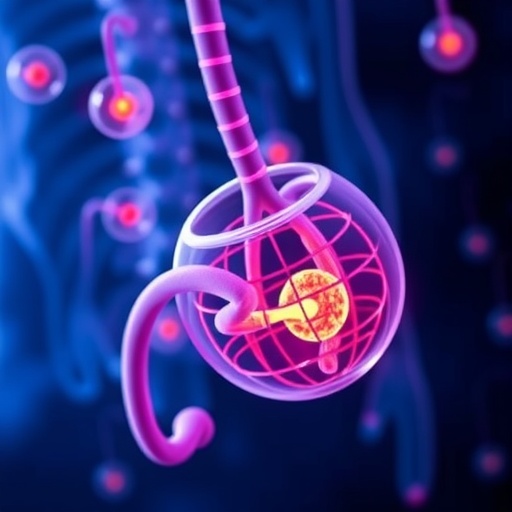
In a groundbreaking advancement poised to redefine pancreatic cancer treatment, a team of researchers from the Sylvester Comprehensive Cancer Center at the University of Miami, the College of Engineering, Moffitt Cancer Center, and Cellular Nanomed, Inc., have demonstrated the remarkable efficacy of magnetoelectric nanoparticles (MENPs) in targeting and eradicating pancreatic tumors in preclinical models. This innovative approach harnesses the unique properties of MENPs — minuscule, magnetically responsive particles — to deliver a wireless, non-invasive, and precisely controlled method of tumor ablation, potentially revolutionizing the therapeutic landscape for this notoriously lethal malignancy.
Pancreatic ductal adenocarcinoma (PDAC) ranks among the deadliest forms of cancer, with five-year survival rates languishing below 10%. Traditional treatment modalities like chemotherapy, radiation, and surgical interventions often inflict collateral damage on healthy tissue, highlighting an urgent need for more refined therapeutic strategies. The newly reported MENP technology circumvents many of these limitations by forgoing pharmacological agents and invasive procedures entirely. Instead, the nanoparticles are administered intravenously, directed to tumor sites by a focused magnet, and activated within the magnetic field of a standard MRI scanner.
Activation of these MENPs generates localized electric fields capable of selectively inducing apoptosis in malignant cells without harming surrounding healthy tissue. This selective cytotoxicity is achieved through the electrical disruption of cancer cell membranes. The intricate physicochemical interplay whereby the MENPs distinguish malignant cells hinges on the molecular and electrical properties unique to cancerous versus normal cells. Upon activation, the MENPs create nanoscale electric fields that compromise tumor cell integrity, triggering programmed cell death through mechanisms that are still being elucidated but likely involve membrane depolarization and intracellular signaling cascades.
Crucially, the application of MENP therapy demonstrated a reduction of pancreatic tumors to one-third their original volume and complete tumor regression in approximately one-third of treated models. Beyond tumor size metrics, this intervention more than doubled survival durations without evidence of damage to non-target tissues. The MRI environment serves a dual purpose, offering both a non-invasive activation platform and high-resolution imaging to monitor nanoparticle localization and therapeutic response dynamically.
The magnetoelectric aspect of MENPs refers to their capacity to convert magnetic stimuli into electric fields, enabling remote, wireless control over therapeutic action. This contrasts sharply with existing electric field-based therapies like tumor treating fields (TTFs) or irreversible electroporation (IRE), which necessitate physically wearable devices or invasive electrode placement. The MENP approach obviates these constraints, leveraging a fully implantable nanotechnology that can be externally modulated in real-time.
Pioneered conceptually in 2011, the foundational idea of using wireless MENPs to manipulate local electric fields within biological tissues has matured through a decade of extensive scientific inquiry and collaboration. The current study represents a culmination of this journey, integrating advances in nanomaterial engineering, cancer biology, and biomedical imaging to foster a novel theranostic paradigm — coupling therapy and diagnostics. By enabling simultaneous tumor imaging and targeted treatment, MENPs could usher in a new era of personalized oncology.
From a biophysical standpoint, human tissues present a complex electric conductivity landscape that has long challenged direct manipulation of intracellular and extracellular fields. MENPs surmount this obstacle by localizing the induced fields specifically to tumor microenvironments, exploiting cancer cells’ altered electrical signatures. This targeting minimizes off-target effects and enhances therapeutic precision.
The research team envisions expanding the applicability of MENP-mediated treatment beyond pancreatic cancer. Given its versatile mechanism, which bypasses chemotherapeutic agents and relies on physical principles of electric field generation, this platform could be adapted to a variety of solid tumors and perhaps other pathological conditions characterized by aberrant cellular electrical properties.
Physician-scientist John Michael Bryant highlighted that this innovation not only refines the safety profile of cancer treatments but also opens avenues for adaptive therapies tailored to individual patients, marking a shift towards precision medicine. The integration of engineering, physics, and clinical science embodied in MENP therapy exemplifies the interdisciplinary synergy increasingly crucial in tackling complex diseases.
While the current findings are derived from rigorous preclinical models, the researchers are optimistic about translating this technology to human clinical trials. Should such translation succeed, the implications for pancreatic cancer prognosis and patient quality of life could be profound, potentially transforming a disease currently deemed intractable into a manageable and ultimately curable condition.
This pioneering study was published in the November 3, 2025 issue of the peer-reviewed journal Advanced Science. It details the sophisticated nanomaterial synthesis methods, precise magnetic field calibration protocols, and comprehensive histological analyses that substantiate the therapeutic claims. Funding sources and potential conflicts of interest have been transparently disclosed within the published paper.
In sum, the advent of magnetoelectric nanotherapy represents a quantum leap in oncology, offering a novel wireless interface with biological systems that can sense, image, and obliterate tumors with unprecedented specificity and minimal toxicity. As research progresses, this technology could redefine the boundaries of what is possible in cancer treatment, highlighting the transformative power of nanotechnology at the intersection of medicine and engineering.
News Publication Date:
November 3, 2025
Web References:
DOI link to the article: http://dx.doi.org/10.1002/advs.202517228
Cite Scienmag News
Rowan B. (November 4, 2025). Innovative Nanoparticle Treatment Reduces Pancreatic Tumors and Prolongs Survival in Preclinical Research. Scienmag. https://scienmag.com/innovative-nanoparticle-treatment-reduces-pancreatic-tumors-and-prolongs-survival-in-preclinical-research/
Rowan B. "Innovative Nanoparticle Treatment Reduces Pancreatic Tumors and Prolongs Survival in Preclinical Research." Scienmag, 4 November 2025, https://scienmag.com/innovative-nanoparticle-treatment-reduces-pancreatic-tumors-and-prolongs-survival-in-preclinical-research/. Accessed 29 August 2026.
Rowan B. "Innovative Nanoparticle Treatment Reduces Pancreatic Tumors and Prolongs Survival in Preclinical Research." Scienmag. November 4, 2025. https://scienmag.com/innovative-nanoparticle-treatment-reduces-pancreatic-tumors-and-prolongs-survival-in-preclinical-research/


