

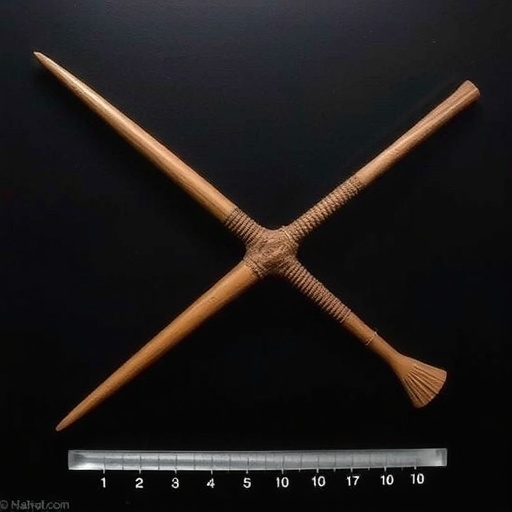
In a groundbreaking archaeological discovery along the northeastern coast of Brazil, an international team of researchers has unveiled evidence that rewrites our understanding of ancient coastal cultures and their interactions with marine megafauna. The scientists have identified whale-bone harpoons dating back approximately 5,000 years, unearthed from stratified coastal deposits. This finding not only pushes back the timeline for sophisticated marine hunting technologies in pre-Columbian South America but also reveals a profound ecological and cultural engagement with whales thousands of years before European contact.
The study, recently published in Nature Communications, harnesses the power of molecular biology combined with zooarchaeological analysis to authenticate the provenance and age of these harpoons. Traditional archaeological methods were augmented through ancient DNA extraction and protein sequencing techniques, enabling scholars to precisely determine the harpoon material was derived from cetacean bone. The confirmation of whale bone as the raw material marks a significant methodological advance in differentiating marine-derived artifacts from other large mammal bones that share superficially similar characteristics.
Prior to this research, evidence for organized whale hunting in prehistoric Brazil remained tenuous, often relegated to ambiguous bone remains or indirect iconographic hints from pottery shards. This latest discovery provides direct proof of intentional whale bone tool manufacturing, implying an unprecedented level of maritime knowledge and technological adaptation. The harpoons were meticulously shaped and polished, indicating a high degree of craftsmanship and an understanding of the biomechanical properties necessary for effective hunting tools in challenging aquatic environments.
The molecular approaches deployed involved extracting collagen peptides from the harpoon fragments and subjecting them to mass spectrometry analysis. These analyses revealed unique peptide sequences consistent with whale species endemic to the South Atlantic Ocean, a testament to the precision of current biomolecular archaeological methods. Coupled with radiocarbon dating of the surrounding sedimentary matrix, the team established a robust 5,000-year chronology that firmly situates this maritime exploitation within the mid-Holocene period.
Beyond the technological implications, the find sheds light on the broader ecological interactions between ancient human populations and marine ecosystems. Active pursuit and processing of whales suggest complex social behaviors, including group hunting strategies and possibly ritualistic practices surrounding whale hunting. These activities would have required intimate knowledge of whale migration patterns, seasonal behaviors, and coastal topography, underscoring the sophisticated environmental adaptations of early coastal societies.
The harpoons’ discovery also invites reconsideration of the cultural narratives surrounding resource use along the Brazilian coast during the early Holocene. Contrary to earlier models that posited subsistence economies heavily reliant on fish and smaller marine animals, this evidence points to a diverse and rich exploitation of large marine vertebrates. The inclusion of cetaceans in the dietary and material culture repertoire would have provided not only sustenance but also raw materials for tools, ornaments, and possibly trade items.
Zooarchaeological examination of the site revealed stratigraphic layers rich in marine vertebrate remains, including fish, sea turtles, and now conclusively, whale bones. The spatial distribution of the artifacts and faunal remains suggests the presence of transient fishing and hunting camps or semi-permanent settlements involved in marine resource exploitation. This challenges prevailing assumptions about the sedentism and mobility of coastal populations in this region during this period.
The integration of molecular and archaeological evidence also allowed for detailed taxonomic resolution, identifying the whale species involved in the harpoon production as primarily members of the Balaenidae family, commonly known as right whales. These species are known for their coastal distribution and slow swimming speeds, factors that might have facilitated their capture using harpoons. Such ecological insight aligns with ethnographic analogies of whaling practices documented in other parts of the world.
An important aspect of this research lies in its implications for understanding prehistoric human impacts on marine mammal populations. The evidence suggests that early coastal communities were capable of exerting significant pressure on local whale populations, hinting at long-standing human-wildlife interactions predating industrial whaling by millennia. This adds a new dimension to conservation biology, placing human influence deep within the Holocene epoch.
Moreover, this discovery resonates on a broader anthropological scale by highlighting the ingenuity and adaptability of human cultures in navigating and exploiting marine environments. It reveals an early form of maritime technology that predates many known whaling practices globally, thereby enriching the narrative of human technological evolution and ecological awareness.
The technical rigor of this study sets a new standard for similar archaeological investigations worldwide. By employing interdisciplinary methods—combining ancient biomolecular techniques with traditional artifact analysis—the researchers have opened pathways for further explorations into prehistoric maritime cultures. Such approaches could be crucial in identifying other yet-undiscovered whaling contexts and refining timelines for human interactions with marine megafauna.
This study also underscores the importance of protecting coastal archaeological sites, which are often vulnerable to environmental changes and human development. The preservation of such contexts is vital for future research, as they harbor key insights into ancient human lifeways and their ecological footprints. Protecting these sites ensures that invaluable data, such as the 5,000-year-old whale-bone harpoons, remain accessible to science and heritage.
Additionally, the collaboration among archaeologists, molecular biologists, and marine ecologists exemplifies the power of interdisciplinary research. Each field contributed uniquely—archaeologists supplied contextual and morphological expertise, molecular scientists provided definitive species identification, and ecologists offered insights into the life histories and behaviors of the whales involved. This synergy enhanced the robustness and depth of interpretations.
This discovery also invites a reflection on the cultural importance of whales within ancient human societies. Whales are often emblematic in coastal mythologies and rituals worldwide, and their prominence in these prehistoric Brazilian contexts might similarly reflect symbolic and spiritual dimensions, which can now be explored through ethnographic parallels and archaeological analyses.
Furthermore, the ramifications of this research extend into debates about the origins and spread of maritime technologies. The recognition of whale bone as a sought-after material for harpoon manufacture suggests a sophisticated understanding of material properties and availability. This points to potentially complex procurement networks and resource management strategies that ancient peoples operated in tandem with their ecological knowledge.
In conclusion, the molecular and zooarchaeological identification of 5,000-year-old whale-bone harpoons in coastal Brazil marks a pivotal advancement in our comprehension of early maritime adaptations and human-animal relationships. It illuminates a nuanced picture of prehistoric inhabitants who harnessed their intimate understanding of marine ecosystems to develop innovative hunting technologies, contributing significantly to the cultural and ecological history of South America’s coastal regions.
Subject of Research:
Molecular and zooarchaeological analysis of ancient whaling technology; prehistoric marine hunting practices in coastal Brazil.
Article Title:
Molecular and zooarchaeological identification of 5000 year old whale-bone harpoons in coastal Brazil.
Article References:
McGrath, K., Montes, T.A.K.d.S., Fossile, T. et al. Molecular and zooarchaeological identification of 5000 year old whale-bone harpoons in coastal Brazil. Nat Commun 17, 48 (2026). https://doi.org/10.1038/s41467-025-67530-w
Image Credits:
AI Generated


