

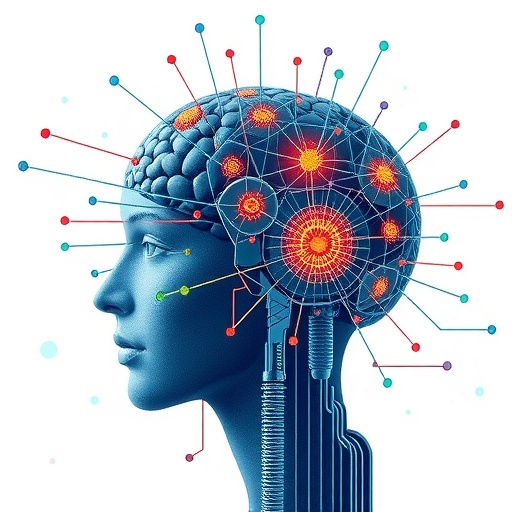
The past four decades have witnessed a profound transformation in the understanding and application of Artificial Intelligence (AI) in relation to human cognitive processes, particularly metacognition. This intricate interplay between technology and human thought has been a focal point of research since the mid-1980s. The study conducted by Varghese and Sharma encapsulates this journey, tracing key developments in AI and metacognition, thereby laying the groundwork for future exploration in this multidisciplinary field.
At the heart of this exploration is the concept of metacognition, which refers to the awareness and understanding of one’s own thought processes. This self-reflective capability is a hallmark of advanced human cognition and underpins effective learning, decision-making, and problem-solving. The emergence of AI has posed intriguing questions about whether machines can emulate this human ability. Research has shown that while AI can analyze data at unprecedented speeds and accuracies, replicating the nuanced self-awareness inherent to metacognition remains a significant challenge.
Through various technological advancements over the years, AI has evolved from rudimentary algorithms to sophisticated systems capable of deep learning and neural processing. This evolution parallels a growing interest among psychologists and cognitive scientists in understanding how metacognitive processes function. The research of Varghese and Sharma delves into this intersection, analyzing pivotal moments from 1985 to the present that have shaped our comprehension of both AI and metacognitive functioning.
One of the key milestones in this timeline is the development of early AI systems in the 1980s, which began as straightforward rule-based machines. These systems predominantly executed tasks that required minimal cognitive load, posing little need for metacognitive strategies. However, as the complexity of tasks evolved, the limitations of these early AIs became evident. The advent of machine learning in the 1990s marked a significant turning point, allowing AI systems to adapt and improve based on new data. This capability opened up discussions on the potential for machines to develop forms of metacognition, making decisions based on the evaluation of their own processes.
The exploration of cognitive architectures in AI has further bridged the gap between artificial and human cognition. The development of models that simulate human metacognitive strategies is of particular interest. Researchers are investigating how these models can be employed to enhance AI learning processes, enabling systems to recognize their limitations and adjust their strategies accordingly. This line of inquiry not only expands our understanding of AI but enriches the theoretical framework surrounding consciousness and self-regulation in human cognition.
Moreover, the interplay between AI and human cognition is becoming increasingly relevant in educational contexts. Educational technology has integrated AI-driven tools that adapt to individual learning styles and paces. Such applications leverage insights from metacognitive research to design more effective learning experiences, empowering students to become aware of their cognitive strategies. This transformative potential illustrates the practical applications of research on AI and metacognition, enhancing the educational landscape significantly.
As we approach 2024, the synergy between AI and metacognition remains a topic of intense discussion. Emerging technologies such as quantum computing and advanced neural networks promise to take AI capabilities to new heights. However, these advancements also raise ethical questions regarding autonomy, intelligence, and the essence of consciousness. The ongoing research aims to address these concerns, seeking to understand the implications of AI systems that can not only learn from data but also assess the validity of their knowledge.
Notably, the recent insights from neuroscience also contribute to this field of study. Advances in brain imaging techniques have illuminated the neural underpinnings of metacognition, providing a biological framework for developing AI systems. By mimicking these neural processes, researchers hope to create AI that mirrors human-like awareness. The intersection of biological understanding and artificial intelligence presents a fertile ground for innovative research that could redefine both domains.
Furthermore, as global society becomes increasingly interconnected through technology, understanding the cognitive processes behind human-AI interaction is paramount. As people interact more frequently with AI systems, grasping how these interactions influence human thinking and decision-making becomes essential. Research conducted over the last 40 years highlights the nuances of these relationships, offering perspectives on how to optimize human-Machine collaboration.
The societal implications of this research extend beyond academic discourse, touching on issues of responsibility and dependence on technology. As AI systems become more integrated into various aspects of daily life, understanding metacognition in this context helps in developing frameworks for responsible usage. Investigating how individuals can maintain agency while interacting with intelligent systems is crucial to fostering a balanced relationship between humans and technology.
In summary, the journey through four decades of research on AI and metacognition reveals a rich tapestry of wonder and complexity. As we reflect on the developments and investigate the future, the work of Varghese and Sharma serves as a reminder of the potential held in combining human cognitive understanding with artificial intelligence. This synergy is not only shaping technological advancements but also redefining our conceptualization of intelligence itself.
As we anticipate further changes in this dynamic field, fostering collaborations between technologists, psychologists, and cognitive scientists will be vital. These partnerships will pave the way for innovations that not only enhance AI capabilities but also enrich human cognition. The path forward promises to be as exciting as the journey thus far, with endless possibilities waiting to be explored.
Subject of Research: The intersection of Artificial Intelligence and human metacognition over the past 40 years.
Article Title: Tracing 40 years of research on Artificial Intelligence and human metacognition from 1985 to 2024.
Article References:
Varghese, M.A., Sharma, P. Tracing 40 years of research on Artificial Intelligence and human metacognition from 1985 to 2024.
Discov Psychol 5, 187 (2025). https://doi.org/10.1007/s44202-025-00463-z
Image Credits: AI Generated
DOI: https://doi.org/10.1007/s44202-025-00463-z
Keywords: Artificial Intelligence, Metacognition, Cognitive Science, Machine Learning, Human-Computer Interaction, Neural Networks, Educational Technology.


