

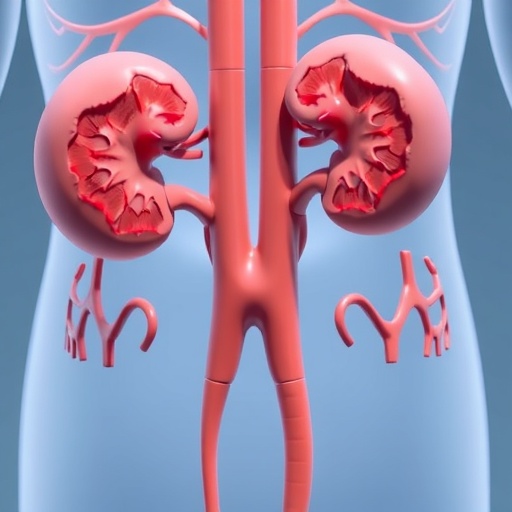
In a groundbreaking study, researchers have delved into innovative educational strategies within the realm of medical training, specifically through a randomized-controlled trial focusing on the application of renal pathology three-dimensional (3D) animation. The study, led by Zhang, Q., Xie, Y., and Ding, F., aims to explore the efficacy of utilizing 3D animated models in teaching pathology to medical students during their clinical clerkships. This innovative approach could potentially revolutionize how future physicians comprehend complex medical concepts, with an emphasis on the intricacies of renal pathology.
For decades, the traditional methods of teaching medical students have been largely reliant on 2D diagrams and textbooks, which often fail to convey the depth and spatial relationships inherent within human anatomy. The incorporation of 3D animations presents an opportunity to bridge this educational gap. Students often struggle to grasp multifaceted structures like those found in kidneys and related disorders solely through static images. With the introduction of 3D animations, learners can visualize anatomical structures and physiological processes in a way that enhances retention and understanding, aiding in their overall educational journey.
The study’s randomized-controlled trial design provides robust data to substantiate the benefits of this modern pedagogical technique. Participants were divided into two groups: one received traditional lectures supplemented by 2D images, while the other was exposed to the same content delivered via comprehensive 3D animation. This side-by-side comparison allows for a clear assessment of the impact that 3D visuals have on student learning outcomes, particularly in retention, comprehension, and engagement levels.
Initial findings suggest that students exposed to the 3D animation group exhibited significantly improved scores in retention tests when compared to their counterparts. This reinforces the hypothesis that visual learning through dynamic mediums can enhance cognitive processing. Students reflected on their experiences, expressing a greater enthusiasm for learning renal pathology when engaging with animations. This enthusiasm is critical in a field where motivation and grasp of complex material can significantly dictate a student’s future success and competency in clinical practice.
Furthermore, the trial explored how the 3D animations foster collaborative learning among students. By working in small groups, students could interactively discuss and navigate through the animated models, offering them a more nuanced understanding of renal pathologies and their associated treatment options. Such collaborative approaches not only strengthen knowledge retention but also promote peer-to-peer teaching, an essential aspect of the medical education process.
Regarding the technological aspects of the study, the use of sophisticated 3D modeling software plays a central role in the effectiveness of these educational tools. The animations themselves are developed from high-resolution imaging technologies and advanced software capable of rendering intricate anatomical details. This level of detail enables students to observe real-life renditions of kidney structures, including nephron organization, blood flow dynamics, and the pathological changes associated with diseases such as glomerulonephritis and renal failure.
Additionally, the adaptability of 3D animations makes them a powerful resource not only in renal pathology but across various fields of medicine. This versatility opens the door to integrating similar educational tools into other modules of medical training—ranging from cardiology to neurology—broadening the spectrum of how medical concepts can be conveyed to aspiring healthcare professionals.
Notably, the study also addresses the scalability of these educational techniques in various educational settings. As medical schools around the world grapple with changes in technology and student learning preferences, the implementation of such animations could lead to a significant shift in curricula. With findings still forthcoming from ongoing and additional trials, there is great anticipation about how these findings may influence future methodologies in medical education.
Furthermore, the implications of this study extend beyond conventional classroom environments. As telemedicine and remote learning grow in viability, the demand for engaging and effective educational resources has surged. The rise of 3D animations in teaching renal pathology signifies a step toward ensuring that high-quality medical training can be accessible regardless of geographical barriers.
The study’s outcomes hold promise for addressing educational inequities as well. By democratizing access to advanced learning tools, institutions in under-resourced areas could elevate their teaching methods, ultimately aiming for parity in medical education standards across diverse demographics. This can be particularly transformative in areas where qualified educators may be scarce, allowing students to engage with cutting-edge visual learning tools independently.
In conclusion, the application of renal pathology three-dimensional animation in clinical clerkship settings not only enhances student engagement but also fosters deeper understanding and retention of complex medical information. As we move toward an increasingly digital future in education, studies like this will serve as critical benchmarks, guiding curriculum development and teaching strategies in medical schools around the globe. Embracing such innovative teaching methods could very well reshape the landscape of medical education as we know it.
As the field continues to evolve, the excitement around integrating advanced visual technologies into medical training represents a paradigm shift towards more interactive, effective learning environments tailored to meet the needs of modern medical students.
Subject of Research: The impact of renal pathology 3D animation on clinical clerkship teaching.
Article Title: Application of renal pathology three-dimensional animation in clinical clerkship teaching for medical students: a randomized-controlled trial.
Article References:
Zhang, Q., Xie, Y., Ding, F. et al. Application of renal pathology three-dimensional animation in clinical clerkship teaching for medical students: a randomized-controlled trial.
BMC Med Educ (2026). https://doi.org/10.1186/s12909-026-08663-4
Image Credits: AI Generated
DOI: 10.1186/s12909-026-08663-4
Keywords: Renal pathology, 3D animation, medical education, clinical clerkship, innovative teaching methods.


