

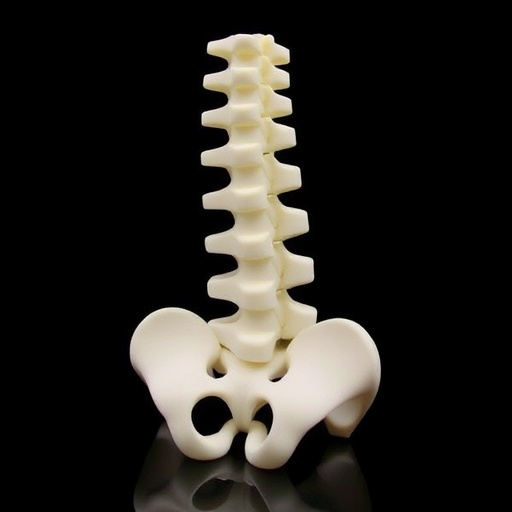
In a groundbreaking development in the realm of medical education, researchers have unveiled a novel approach towards resident training in spinal surgery. The study, spearheaded by Han et al., presents a cost-effective 3D-printed model designed for the intricate procedure of posterior lumbar interbody fusion (PLIF). This innovative simulation model is not only poised to enhance the quality of surgical training but also addresses a critical need for hands-on practice in a rapidly evolving medical landscape.
The traditional methods of surgical training often rely on cadaveric models and didactic learning, which may not sufficiently prepare residents for the complexities they will face in actual procedures. The emergence of this 3D-printed model marks a significant milestone, as it offers a more accessible and reproducible alternative. By integrating technology with surgical education, the research team aims to revolutionize how residents are trained, thus improving patient outcomes in the long run.
The study was initiated to evaluate the feasibility of using this 3D-printed model for stepwise simulation workflows. This model meticulously replicates the anatomical nuances necessary for performing posterior lumbar interbody fusion. The research team developed detailed protocols that allow residents to practice step-by-step procedures on this lifelike model, thereby enhancing their technical skills and confidence before encountering real patients.
Clinical scenarios simulated on the 3D model include the pre-operative planning stage, the surgical approach, and post-operative care. Each phase of the process has been crafted to reflect the actual challenges surgeons face during PLIF, ensuring that training on this model is as realistic as possible. This immersive experience not only aids in skill acquisition but also fosters critical thinking and decision-making abilities among residents.
Furthermore, the use of 3D printing technology in medical training has been on the rise, with studies suggesting that such approaches can lead to improved retention of knowledge. The tactile feedback provided by a 3D-printed model offers a distinct advantage, allowing residents to engage in a hands-on learning experience—a stark contrast to passive learning methods often utilized in medical education. This model serves as a bridge between theoretical concepts and practical application, ultimately leading to more competent future surgeons.
Another significant advantage of the model developed by Han et al. lies in its cost-effectiveness. Traditional surgical training models, particularly those utilizing cadavers, often come with significant financial burdens and logistical challenges. The 3D-printed model, on the other hand, can be produced at a fraction of the cost and replicated as needed. This democratization of surgical training resources has the potential to level the playing field, providing residents from various institutions with equal opportunities to practice and hone their skills.
The pilot feasibility study conducted by the research team included feedback from residents who participated in training sessions utilizing the 3D model. The responses were overwhelmingly positive, highlighting the model’s realistic representations of human anatomy and the effectiveness of its design in facilitating learning. Residents reported increased confidence in their abilities to perform posterior lumbar interbody fusion procedures, attributing their enhanced skills to the rigorous practice they received through this innovative training tool.
Moreover, the potential for this 3D-printed model extends beyond just PLIF. The methodologies developed in this study could very well be adapted to other surgical disciplines, paving the way for a new standard in medical education. As the healthcare field continues to evolve, the integration of technology into training protocols will become increasingly vital. Innovative solutions like the 3D model introduced by Han et al. exemplify how advancements in technology can be leveraged to address educational gaps in the medical community.
As this study demonstrates, the landscape of surgical training is on the brink of transformation. With the introduction of accessible and effective training models, the next generation of surgeons is poised to enter the field better prepared than ever before. This pioneering research not only contributes to the field of medical education but also underscores the critical importance of embracing technological advancements in improving healthcare delivery.
In conclusion, the pilot feasibility study on the 3D-printed model for posterior lumbar interbody fusion signifies a significant leap towards enhancing surgical training. By providing residents with realistic, hands-on experiences, this approach addresses the pressing need for enhanced educational resources in medicine. As institutions begin to adopt such innovations, the future of surgical education appears promising, with potential implications that could reverberate throughout the healthcare community for years to come.
The world of medical training is evolving, and it is imperative for educational institutions and training programs to keep pace with these changes. The work of Han et al. serves as a compelling reminder that creativity and innovation are essential in developing effective solutions for tomorrow’s healthcare challenges. The integration of 3D printing technology into surgical training not only elevates the learning experience but also strengthens the fundamental principle that effective training ultimately leads to improved patient care.
As more studies and pilot programs emerge from this research, the implications for surgical education are vast. The establishment of cost-effective, realistic training models will likely become a crucial part of residency programs, ensuring that all surgical residents receive the high-quality education they deserve. The collaboration of technology and medicine will undoubtedly continue to shape the future of healthcare training and practice.
Subject of Research: Cost-effective 3D-printed models for surgical training.
Article Title: A novel and cost-effective 3D-printed model enabling stepwise simulation workflows of posterior lumbar interbody fusion for resident training – a pilot feasibility study.
Article References:
Han, L., Wang, A., Su, X. et al. A novel and cost-effective 3D-printed model enabling stepwise simulation workflows of posterior lumbar interbody fusion for resident training – a pilot feasibility study.
BMC Med Educ (2026). https://doi.org/10.1186/s12909-025-08514-8
Image Credits: AI Generated
DOI: 10.1186/s12909-025-08514-8
Keywords: 3D printing, surgical training, posterior lumbar interbody fusion, medical education, resident training, cost-effective models.


