

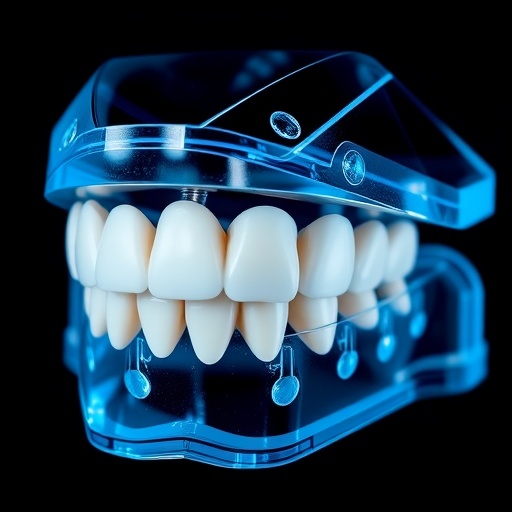
In a groundbreaking study published in Scientific Reports in 2026, researchers have presented an extensive three-year clinical evaluation of wear performance in various bulk-fill resin composite restorations designed for class II cavities. These restorations, which address decay and structural defects in the posterior teeth, are critically important in dentistry due to their dual demands for mechanical durability and aesthetic longevity. The study by Goda, B., Eltoukhy, R.I., Ali, A.I., and colleagues delves deeply into the comparative performance of these materials under real-world conditions, shedding new light on their long-term efficacy and guiding future clinical practices.
Class II restorations pose unique challenges because they involve the proximal surfaces of molars and premolars, areas subjected to complex occlusal forces during mastication. The need for materials that endure the rigors of chewing, resist wear, and maintain marginal integrity is paramount. Bulk-fill resin composites have gained popularity in recent years because they allow for thicker incremental placement compared to traditional composites, reducing procedure time. However, concerns linger regarding their wear resistance and clinical durability under sustained occlusal pressures.
This study distinguishes itself by rigorously evaluating different bulk-fill resin composites over a substantial period of three years, offering insights that surpass the typical short-term analyses frequently reported in dental materials research. The authors implemented a randomized, controlled, clinical trial design, which not only enhances the validity of their findings but also incorporates a robust patient cohort that reflects diverse variables including age, occlusal dynamics, and oral hygiene habits. Such methodological rigor ensures that the conclusions drawn are directly translatable to everyday dental practice.
One of the most striking findings from this research is the variability in wear patterns among tested composite materials. Despite all being marketed as bulk-fill options, the composites exhibited distinctive behaviors in terms of surface degradation, volume loss, and marginal breakdown. These differences stem primarily from their intrinsic filler content, resin matrix composition, and degree of polymerization – factors which interact synergistically to influence the mechanical and tribological properties of the restorations.
Behind these results lies the complex chemistry of bulk-fill composites. Typically, these materials employ a combination of high molecular weight monomers and optimized filler particles to achieve both depth of cure and mechanical resilience. However, discrepancies in the size, distribution, and chemical coupling of fillers translate into altered wear resistance. For example, composites with nanoscale fillers demonstrate improved polishing capabilities but may be susceptible to increased surface roughness after extended occlusal load. Conversely, composites with larger fillers show greater initial strength but risk brittle fracture over time.
The wear mechanism itself is multifactorial. The clinical environment exposes resin composites to cyclic loading, thermal fluctuations, and chemical challenges from saliva and dietary substances. Such conditions can provoke microcracking, filler particle debonding, and matrix abrasion, cumulatively degrading the restorative surface. The study’s longitudinal observation period uniquely captures this progressive deterioration, mapping it quantitatively through precise volumetric wear measurements and qualitatively via microscopic imaging.
Clinically relevant parameters such as restoration retention, marginal integrity, anatomical form, and surface texture were systematically scored according to advanced evaluation criteria. The most resilient composites maintained high scores across these metrics even after three years, signaling their potential as preferred choices for posterior restorative procedures. Notably, the bulk-fill composites that incorporated innovative monomers with enhanced cross-linking capabilities showed significantly less wear and marginal breakdown compared to conventional formulations.
The implications of these findings extend beyond mere material selection. They advocate for a paradigm shift toward evidence-based restorative dentistry where the choice of resin composite is tailored not only to immediate handling advantages but also to anticipated long-term performance under functional stresses. This approach would mitigate premature restoration failures, reduce retreatment rates, and ultimately improve patient outcomes.
Furthermore, the study underscores the necessity of integrating wear resistance evaluations into the regulatory assessment of new dental materials. Traditionally, such products have been approved based on in vitro tests or short clinical trials that insufficiently predict in-mouth durability. The comprehensive data provided here argue for extended follow-up periods and sophisticated analytical techniques to truly discern the clinical viability of emerging composites.
Technological advancements facilitating this research include state-of-the-art 3D scanning systems and digital volumetric analysis software, enabling clinicians and researchers to quantify wear with unprecedented accuracy. This synergy of material science and digital dentistry represents a new frontier in restorative evaluation, promising more objective and reproducible results than subjective visual assessments alone.
From a patient perspective, understanding the wear performance of restorations is critical. Restorations that degrade quickly can cause discomfort, secondary caries, and esthetic issues, impacting quality of life. The nuanced insights from this three-year study help clinicians advise patients more effectively on the expected longevity of different treatment options, fostering informed decision-making and enhancing treatment satisfaction.
The broader relevance of this research also touches on healthcare cost implications. Durable restorations minimize the need for replacements and repairs, translating to lower long-term expenses for both the healthcare system and patients. As bulk-fill composites continue to gain traction worldwide due to their procedural efficiency, ensuring their mechanical robustness is imperative to sustain their economic and clinical benefits.
In conclusion, the comprehensive three-year clinical evaluation by Goda and colleagues provides a vital knowledge base on the wear performance of bulk-fill class II resin composite restorations. It highlights the heterogeneity in material behavior, elucidates wear mechanisms under clinical conditions, and aligns dental practice with rigorous scientific evidence. Such work paves the way for enhanced restorative protocols that are optimized for both durability and patient-centered outcomes, marking a significant stride forward in restorative dentistry.
Subject of Research: Wear performance of bulk-fill class II resin composite restorations over three years in clinical settings
Article Title: Wear performance of different bulk-fill class II resin composite restorations: 3-year clinical evaluation
Article References:
Goda, B., Eltoukhy, R.I., Ali, A.I. et al. Wear performance of different bulk-fill class II resin composite restorations: 3-year clinical evaluation. Sci Rep (2026). https://doi.org/10.1038/s41598-026-41420-7
Image Credits: AI Generated
DOI: 10.1038/s41598-026-41420-7
Keywords: Bulk-fill resin composites, class II restorations, wear performance, clinical evaluation, dental materials, restorative dentistry, polymerization, filler content, occlusal load, long-term durability


